"And He feeds me and quenches my thirst and when I fall sick then He (Allah) cures me" [Soorah Shu'araa: 80]


Showing posts with label cancer. Show all posts

22.2.12

LATEST CANCER INFORMATION

AFTER YEARS OF TELLING PEOPLE CHEMOTHERAPY IS THE ONLY WAY TO TRY AND ELIMINATE CANCER, JOHNS HOPKINS IS FINALLY STARTING TO TELL YOU THERE IS AN ALTERNATIVE WAY …

[Cancer Update from Johns Hopkins ]

1. Every person has cancer cells in the body. These cancer cells do not show up in the standard tests until they have multiplied to a few billion. When doctors tell cancer patients that there are no more cancer cells in their bodies after treatment, it just means the tests are unable to detect the cancer cells because they have not reached the detectable size.

2. Cancer cells occur between 6 to more than 10 times in a person's lifetime.

3. When the person's immune system is strong the cancer cells will be destroyed and prevented from multiplying and forming tumors.

4. When a person has cancer it indicates the person has multiple nutritional deficiencies. These could be due to genetic, environmental, food and lifestyle factors.

5. To overcome the multiple nutritional deficiencies, changing diet and including supplements will strengthen the immune system.

6. Chemotherapy involves poisoning the rapidly-growing cancer cells and also destroys rapidly-growing healthy cells in the bone marrow, gastro-intestinal tract etc, and can cause organ damage, like liver, kidneys, heart, lungs etc.

7. Radiation while destroying cancer cells also burns, scars and damages healthy cells, tissues and organs.

8. Initial treatment with chemotherapy and radiation will often reduce tumor size. However prolonged use of chemotherapy and radiation do not result in more tumor destruction.

9. When the body has too much toxic burden from chemotherapy and radiation the immune system is either compromised or destroyed, hence the person can succumb to various kinds of infections and complications.

10. Chemotherapy and radiation can cause cancer cells to mutate and become resistant and difficult to destroy. Surgery can also cause cancer cells to spread to other sites.


11. An effective way to battle cancer is to STARVE the cancer cells by not feeding it with foods it needs to multiple.

What cancer cells feed on:

a. Sugar is a cancer-feeder. By cutting off sugar it cuts off one important food supply to the cancer cells. Note: Sugar substitutes like NutraSweet, Equal, Spoonful, etc are made with Aspartame and it is harmful. A better natural substitute would be Manuka honey or molasses but only in very small amounts. Table salt has a chemical added to make it white in colour. Better alternative is Bragg's aminos or sea salt.


b. Milk causes the body to produce mucus, especially in the gastro-intestinal tract. Cancer feeds on mucus. By cutting off milk and substituting with unsweetened soy milk, cancer cells will starved.

c. Cancer cells thrive in an acid environment. A meat-based diet is acidic and it is best to eat fish, and a little chicken rather than beef or pork. Meat also contains livestock antibiotics, growth hormones and parasites, which are all harmful, especially to people with cancer.

d. A diet made of 80% fresh vegetables and juice, whole grains, seeds, nuts and a little fruits help put the body into an alkaline environment. About 20% can be from cooked food including beans. Fresh vegetable juices provide live enzymes that are easily absorbed and reach down to cellular levels within 15 minutes t o nourish and enhance growth of healthy cells.

To obtain live enzymes for building healthy cells try and drink fresh vegetable juice (most vegetables including bean sprouts) and eat some raw vegetables 2 or 3 times a day. Enzymes are destroyed at temperatures of 104 degrees F (40 degrees C).

e. Avoid coffee, tea, and chocolate, which have high caffeine. Green tea is a better alternative and has cancer-fighting properties. Water--best to drink purified water, or filtered, to avoid known toxins and heavy metals in tap water. Distilled water is acidic, avoid it.

12. Meat protein is difficult to digest and requires a lot of digestive enzymes. Undigested meat remaining in the intestines will become putrified and leads to more toxic buildup.


13. Cancer cell walls have a tough protein covering. By refraining from or eating less meat it frees more enzymes to attack the protein walls of cancer cells and allows the body's killer cells to destroy the cancer cells.

14. Some supplements build up the immune system (IP6, Flor-ssence, Essiac, anti-oxidants, vitamins, minerals, EFAs etc.) to enable the body's own killer cells to destroy cancer cells. Other supplements like vitamin E are known to cause apoptosis, or programmed cell death, the body's normal method of disposing of damaged, unwanted, or unneeded cells.

15. Cancer is a disease of the mind, body, and spirit. A proactive and positive spirit will help the cancer warrior be a survivor.

Anger, unforgiving and bitterness put the body into a stressful and acidic environment. Learn to have a loving and forgiving spirit. Learn to relax and enjoy life.

16. Cancer cells cannot thrive in an oxygenated environment. Exercising daily, and deep breathing help to get more oxygen down to the cellular level. Oxygen therapy is another means employed to destroy cancer cells.


(PLEASE SHARE IT TO PEOPLE YOU CARE ABOUT)


18.1.12

How to Starve Cancer Out of Your Body


Addressing your diet should be at the top of your list, and rather than adding certain foods, you'll want to eliminate the most dangerous culprits first.

1. Red meat from animals reared in confined animal feeding operations (CAFO's) is a MAJOR contributor to cancer. These animals are given antibiotics, growth hormones and other veterinary drugs that get stored in their tissues. Additionally, cooking the meat over high heat creates heterocyclic amines, which further add to its carcinogenic effect.

2. Sugar. It is a universal mechanism for chronic disease. It kicks up inflammation. It kicks up oxygen free radicals. Those are the two main processes we see that underlie any single chronic disorder, including cancers. It fuels the growth of breast cancers, because glucose is cancer's favorite food. The more you consume, the faster it grows."

3. Fats. It's important to remember that every cell membrane is made out of fat, as is your brain.Bad-fats in the diet are a major contributor to ill health and cancer. On the list of fats to eliminate are:
  • Animal fats from CAFO-raised animals
  • Trans fats
  • Partially hydrogenated or hydrogenated fats

Healthy fats of particular importance for cancer prevention are omega-3 and omega-9. Omega-3 in particular serve to effectively slow down tumor growth in estrogen-sensitive cancers such as breast-, prostate- and colon cancers.

4. Xenoestrogens (chemicals that mimic estrogen). This can become a rather long list once you start including any food contaminated with such estrogen-mimicking chemicals, such as BPA, found in the linings of canned goods and in plastics. The list gets truly unwieldy when you include personal care products that contain such chemicals as well…


Eating for Cancer Prevention


Research clearly shows that the one food that is the most important for optimal health is plant foods.

"Plants are packed full of nutrients, vitamins, and minerals that are crucial for our health. They also have hundreds of phytochemicals in them. These don't have any nutritional or caloric value, but they are like natural medicines, and some of them behave exactly like chemotherapy," she says.

"Every plant has some anti-cancer properties to them. There are some that are standouts. Cruciferous vegetables are something that I really recommend. They're a family of vegetables that include broccoli, cauliflower, kale, collards, and Brussels sprouts…

All of them have several different chemicals in common. They've got indole-3-carbinol, Calcium D-glucarate, and sulforaphane. They have big anti-cancer properties to them, and they inhibit the growth of breast, prostate, colon cancer and a variety of other ones. Of all the families of vegetables to consume, [cruciferous vegetables] are the ones to be aware of, so you can make sure you're including that in your diet frequently."


Other Lifestyle Factors that Influence Your Cancer Risk

Other lifestyle factors that have been found to have an impact on chronic disease and cancer include:

  • Vitamin D—There's overwhelming evidence pointing to the fact that vitamin D deficiency plays a crucial role in cancer development. As mentioned earlier, you can decrease your risk of cancer by MORE THAN HALF simply by optimizing your vitamin D levels with sun exposure. And if you are being treated for cancer it is likely that higher blood levels—probably around 80-90 ng/ml—would be beneficial. The health benefits of optimizing your levels, either by safe sun exposure (ideally), a safe tanning bed, or oral supplementation as a last resort, simply cannot be overstated. In terms of protecting against cancer, vitamin D has been found to offer protection in a number of ways, including:

    • Regulating genetic expression
    • Increasing the self-destruction of mutated cells (which, if allowed to replicate, could lead to cancer)
    • Reducing the spread and reproduction of cancer cells
    • Causing cells to become differentiated (cancer cells often lack differentiation)
    • Reducing the growth of new blood vessels from pre-existing ones, which is a step in the transition of dormant tumors turning cancerous
  • Getting proper sleep: both in terms of getting enough sleep, and sleeping between certain hours. According to Ayurvedic medicine, the ideal hours for sleep are between 10 pm and 6 am. Modern research has confirmed the value of this recommendation as certain hormonal fluctuations occur throughout the day and night, and if you engage in the appropriate activities during those times, you're 'riding the wave' so to speak, and are able to get the optimal levels. Working against your biology by staying awake when you should ideally be sleeping or vice versa, interferes with these hormonal fluctuations.

    "If we, for instance, go to bed by 10, we have higher levels of our sleep hormone melatonin; there's a spike that occurs between midnight and 1am, which you don't want to miss because the consequences are absolutely spectacular. Melatonin is not only our sleep hormone, but it also is a very powerful antioxidant. It decreases the amount of estrogen our body produces. It also boosts your immune system… And it interacts with the other hormones.

    So, if you go to bed after 10… it significantly increases your risk of breast cancer."
  • Effectively addressing your stress: The research shows that if you experience a traumatic or highly stressful event, such as a death in the family, your risk of breast cancer is 12 times higher in the ensuing five years.
  • Exercise—If you are like most people, when you think of reducing your risk of cancer, exercise doesn't immediately come to mind. However, there is some fairly compelling evidence that exercise can slash your risk of cancer.

    One of the primary ways exercise lowers your risk for cancer is by reducing elevated insulin levels, which creates a low sugar environment that discourages the growth and spread of cancer cells. Additionally, exercise improves the circulation of immune cells in your blood. Your immune system is your first line of defense against everything from minor illnesses like a cold right up to devastating, life-threatening diseases like cancer.

    The trick about exercise, though, is understanding how to use it as a precise tool. This ensures you are getting enough to achieve the benefit, not too much to cause injury, and the right variety to balance your entire physical structure and maintain strength and flexibility, and aerobic and anaerobic fitness levels. This is why it is helpful to view exercise like a drug that needs to be carefully prescribed to achieve its maximum benefit. For detailed instructions, please see this previous article.

    Additionally it is likely that integrating exercise with intermittent fasting will greatly catalyze the potential of exercise to reduce your risk of cancer and stimulate widespread healing and rejuvenation.

Adapted from:-

http://articles.mercola.com/sites/articles/archive/2012/01/14/dr-christine-horner-interview.aspx?e_cid=20120114_DNL_art_1

13.5.11

Dr.Tateishi’s Cancer Healing Formula

by Dr. Tateishi Kazu

What This Remedy May Do:

  1. Heal Cancer
  2. Restore injured joints and bone structure
  3. Slow down the aging process
  4. Rejuvenate the skin
  5. Heal Cataracts
  6. Heal liver disorders
  7. Lower high blood pressure
  8. Improve heart conditions
  9. Reduce brain tumors and other head-injury problems
  10. Reduce high white blood cell counts
  11. Improve T-cell function

History

When cancer strikes a family, what course of action should one take? Dr. Tateishi Kazu's father and brother both died of cancer. And then he found himself suffering from cancer of the duodenum and spreading. His stomach was removed, but the cancer cells had spread to his lungs. He resolved to fight for his life. He researched, studied and tested over 1,500 types of herbs and plants. Eventually he discovered the right combination of ingredients and formulated a unique healing vegetable soup and brown rice tea with its own molecular powers. The vegetables are rich in green chlorophyll, amino acids, iron, phosphorous, calcium, all in a natural form.

He based his soup on the principles of Five Elements theory, the harmonizing balance of the forces of yin and yang, acid and alkaline that engenders health as opposed to the imbalance, which leads to disease.

The five elements in our environment are wood, fire, earth, metal and water. Because of the balance of the five elements, the earth is able to produce life. Dr. Tataishi Kazu used the essence of the five elements. Each essence possesses its own color: green, red, yellow, white and black. These relate to the corresponding internal organs: heart, liver, spleen, lung and kidneys. He used the concept of the five different colors as matched to specific vegetables.

  • Green/Daikon Radish Leaves
  • Red/Carrot
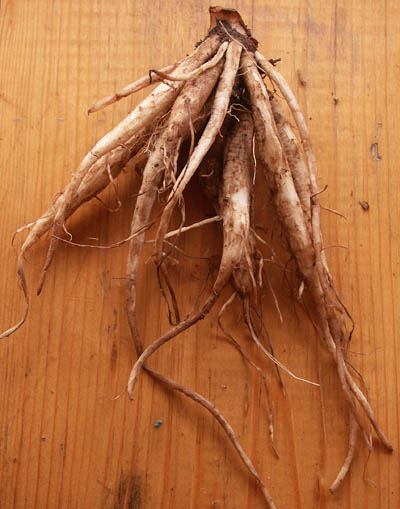
  • Yellow/Burdock Root
  • White/Daikon Radish
  • Black/Shittake Mushrooms

Notes: This is a remedy for all age groups. When the soup is ingested, it produces thirty different elements for fighting disease. Within three days, it can stop the growth of cancer cells. Even for some last-stage cancer patients, it can lead to 100% remission. Patients who have subsisted on feeding tubes for nourishment, when given the soup, after two days regained their strength. Over 10,000 last-stage cancer patients have used this remedy. 99% are alive and were able to return to work. Bottom of Form 1.

Vegetable Soup Recipe - (2 day's quantity)

white daikon


carrots


daikon greens

burdock root


shiitake mushroom

Ingredients: -

  • 16 ounces white daikon
  • 8-10 ounces white daikon greens
  • 8-10 ounces carrot
  • 8 ounces burdock root (called Gobo in Japanese, Uang in Korean, Ngao pong or Niu pang in Chinese)
  • 3-5 fresh shitake mushrooms (sundried) - if not sundried, expose dried mushrooms to sun again.

Directions: -

1. Don't peel anything! Don't add any seasoning!

2. Fill a pot with three times the quantity of water as the vegetable. When it comes to a boil, reduce the flame and simmer for two hours. Strain and drink.

Brown Rice Tea Recipe

Another remedy that can be used in conjunction with the vegetable soup is brown rice tea. It is a good diuretic for ridding excess water from the body. For diabetics, it can bring the sugar level down by producing more natural insulin in the body. It cleanses the blood and blood vessel. A person with a heart condition drinking both soups in 20 days will be able to regulate their problem by drinking three cups per day. For a regular cancer patient, about two cups.

1.- 1 cup brown rice

2. 16 cups water

Note: only cook in stainless steel or glass. Do not mix with any other ingredients. Don't be "creative."

Directions: -

1. Roast the rice without oil until dark brown but don't burn. Boil 8 cups of water and pour roasted rice into water. Turn off flame, cover and let sit five minutes. Strain out rice and reserve liquid.

2. Boil 8 more cups of water. Put the remaining rice back in the water. Cover, lower flame and simmer five minutes. Strain rice out. Mix the two rice waters together.

Special Notes: -

  • The amount one needs depend on the condition. The more serious the condition, the more tea.
  • Do not drink tea while taking a high protein substance.
  • Don't drink the vegetable soup and brown rice tea together. Wait at least 15 minutes apart.
  • If you use this remedy regularly you will never be sick.

Some possible reactions: -

  • itchy skin or eczema
  • If you use medications and/or have eczema, use less because of stronger reaction
  • People with head injury problems may develop headaches but don't worry.
  • People with eye problems may get temporary blurred vision or itching around eyes. Eyesight will get better. If you wear prescription glasses, try to reduce the prescription and use glasses less frequently.
  • Lowering of body temperature, but this is normal.

Notes: For high blood pressure, drink the two soups alternately but slowly. Blood pressure will come down after one month. Talk to a doctor about reducing medication, but don't stop medication right away. Use remedy for minimum of one month.

Progress of Healing

  • After three days of use, cancer cells stop growing.
  • After a minimum of one month normal cells begin to grow back.
  • Pancreatic Cancer: minimum 1 month
  • Stomach Cancer: 1 month
  • Liver Cancer: 1 year
  • Rheumatism: 1 year
  • Cataracts: 4 months
  • Eye Disease: 1-4 months
  • Insomnia, Sinusitis, Fatigue: 10-20 days
  • Eczema: 4-7months
  • Liver Spots: 3-6 months skin will clear
  • Hair growth: 6-12 months
  • Epilepsy: 3-6 months
  • Stroke: 6-12 months
  • Irregular heart beat: 20 days

Notes: If you are on medication, consult with a doctor to adjust your dosage. This remedy works for some people. It may not work for you. It is not intended to replace the traditional treatments.

Q1: Are ingredients of the vegetable soup recipe measured in fluid ounces or real weights?

A1: Dr. Antonia Martinez Director of the Healing Spirit said that their recipe uses the real weights and not the fluid ounces as in other food recipes.

Q2: Do people using the Vegetable Soup have side effects or reactions?

A2 : Depending on individual bodies, some people using the Vegetable Soup could have side effects/reactions. Reactions are classified in 2 categories: -

Natural Reaction: Ingredients in the Vegetable soup have lots of medicinal effects and contain chemicals that are working on human cells to make them better and stronger, and in the same time purify and cleanse blood stream to push out LDL (bad cholesterol) and fat. Reactions could be itches on the skin, itches around eyes, blurring eyes but these reactions will go away in a few days. If reactions persist stop the HLEF for a few weeks and start again.

Patient or user mistakes could be ranging from: -

  • (1) using the wrong kind of ingredients especially the Chinese mushrooms instead of the Japanese Shiitakes.
  • (2) the proportion of vegetables making the soup is not followed closely.
  • (3) using wrong type of saucepan. Must use stainless steel saucepan to cook.
  • (4) vegetable soup left outside in room temperature more than 6 hours can turn out to have bad smelling or color changes to green or white. Throw it away at once. Vegetable Soup should be stored in glass container and refrigerated.
  • (5) drinking the Vegetable Soup and the Brown Rice solution together or in the same time. People are reporting serious reactions when taking those two solutions in the same time. Must drink them separately with half-hour or one hour apart.

Q3: How much vegetable soup can one consume a day?

A3: For:

  • Diabetes take 600 cc of Brown rice (BR) solution in the morning and 400 cc of Vegetable Soup (VS) in the afternoon.
  • Heart problem: 300 cc of BR and 600 cc of VS
  • Gall stones: 600 cc of BR and 600 cc of VS.
  • Other diseases: About 600 cc (2.5 cups) of VS a day divided in 3 rations before meals.

IMPORTANT NOTE

DO NOT DRINK Vegetable Soup and Brown Rice Solution in the same time. The interval needed between consumption of BR and VS must be at least 30 minutes or 1 hour apart to be safe.

Burdock

This herb gets its name from bur, for its tenacious burrs, and dock old English for plant. Many scientists are skeptical about Burdock and its uses. However, as a healing herb it has a potential for treating cancer. Early Chinese physicians, as well as Ayurvedic healers, used Burdock as a remedy for colds, flu, throat infections and pneumonia. During the 14th Century, its leaves were pounded in wine and used to treat leprosy. From 1930-1950, Burdock was used as an ingredient in alternative cancer treatments.

The FDA noted that too much of this herb can cause side effects and lists Burdock as an herb of "undefined safety". However, German researchers have discovered fresh Burdock root contains polyacetylenes, a chemical that kills disease-causing bacteria and fungi. It also reduces mucus and prevents formation of gall and kidney stones. As Burdock contains vitamin A and selenium, it can eliminate free radicals.

Its chromium content helps regulate blood sugar levels. Other qualities of this herb, set forth in the magazine Chemotherapy, identified a chemical (arctigenin) in Burdock which acts as an inhibitor of tumor growth.

!!! This herb should not be used by pregnant women.!!!

History

Burdock is also known by the names Bardane, Clotburr, Beggars Buttons, Gypsy Rhubarb, Gobo, and Burr. In traditional herbal texts, Burdock Root is described as a "blood purifier" or "alterative", and was believed to clear the bloodstream of toxins.

Medicinally, Burdock Root has been used both internally and externally for eczema and psoriasis, as well as to treat painful joints and as a diuretic.

In traditional Chinese medicine, Burdock Root, in combination with other herbs, is used to treat sore throats, tonsillitis, colds, and even measles.

It is eaten as a vegetable in Japan and elsewhere. Burdock is a mild laxative. It also aids in the elimination of uric acid. The herb contains polyacetylenes that have both anti-bacterial & anti-fungal properties. By improving the function of many organs of elimination (liver, kidneys, bowels), many health conditions can be improved.

Burdock Root contains high amounts of inulin and mucilage. This may explain its soothing effects on the gastrointestinal tract. Bitter constituents in the root may also explain the traditional use of Burdock to improve digestion. The polyacetylene constituents have also been shown to have anti-microbial activity. Burdock Root (and the fruit) also has the ability to mildly lower blood sugar (hypoglycemic effect).

Medicinal Action and Uses

Alterative, diuretic and diaphoretic. One of the best blood purifiers. In all skin diseases, it is a certain remedy and has effected a cure in many cases of eczema, either taken alone or combined with other remedies, such as Yellow Dock and Sarsaparilla.

The root is principally employed, but the leaves and seeds are equally valuable. Both root and seeds may be taken as a decoction of 1 OZ. to 1 1/2 pint of water, boiled down to a pint, in doses of a wineglassful, three or four times a day.

The anti-scorbutic properties of the root make the decoction very useful for boils, scurvy and rheumatic affections, and by many it is considered superior to Sarsaparilla, on account of its mucilaginous, demulcent nature; it has in addition been recommended for external use as a wash for ulcers and scaly skin disorders.

An infusion of the leaves is useful to impart strength and tone to the stomach, for some forms of long-standing indigestion.

When applied externally as a poultice, the leaves are highly resolvent for tumours and gouty swellings, and relieve bruises and inflamed surfaces generally. The bruised leaves have been applied by the peasantry in many countries as cataplasms to the feet and as a remedy for hysterical disorders.

From the seeds, both a medicinal tincture and a fluid extract are prepared, of benefit in chronic skin diseases. Americans use the seeds only, considering them more efficacious and prompt in their action than the other parts of the plant. They are relaxant and demulcent, with a limited amount of tonic property. Their influence upon the skin is due largely to their being of such an oily nature: they affect both the sebaceous and sudoriferous glands, and probably owing to their oily nature restore that smoothness to the skin which is a sign of normal healthy action.

The infusion or decoction of the seeds is employed in dropsical complaints, more especially in cases where there is co-existing derangement of the nervous system, and is considered by many to be a specific for all affections of the kidneys, for which it may with advantage be taken several times a day, before meals.

Treats certain cancers, prevents diabetes

Burdock's name is a combination of bur, for its spiked seed covers - burrs - that grab onto anything that touches them, and dock, Old English for "plant." Many scientists dismiss burdock as useless, but like its seeds, its reputation as an herbal healing agent clings tenaciously because of its subtle tonic benefits and its intriguing potential as a treatment for cancer.

Throughout history, burdock has been recommended for an astonishing number of illnesses. Ancient Chinese physicians used it to treat colds, coughs, tonsillitis, measles, skin infections and snakebite. Traditional European and American herbalists and homeopaths prescribed it for colds, arthritis, gout, stomach problems, fever, canker sores, leprosy, boils, gonorrhea, ringworm and infertility. They also considered it an excellent diuretic, and prescribed it for urinary tract infections, kidney problems and painful urination.

True, burdock is not powerfully therapeutic. But Daniel B. Mowrey, PhD, director of the American Phytotherapy Research Laboratory in Salt Lake City, Utah, and author of The Scientific Validation of Herbal Medicine, insists that it deserves its enduring place in herbal healing because of its value as a tonic - a subtle strengthener with cumulatively helpful effects.

"Burdock's action is mild, but real," Dr. Mowrey explains. "It has antibacterial and antiviral powers, and it reduces blood sugar, which helps prevent diabetes. I recommend using a little every day. And when you're ill, use it in addition to standard therapies."

With Compliments from Chong Min Liong

7.6.10

Penyembuhan Prana Siri 29

1) Cakra Mahkota (Crown Chakra)

-Terletak pada bahagian 'mahkota' kepala. Ianya mengawal dan mentenagakan kelenjar pineal, otak dan keseluruhan badan. Ia adalah salah satu pintu kemasukan utama prana. Mentenagakan Cakra Mahkota mempunyai kesan seperti mentenagakan keseluruhan badan. Ianya seperti kita menuangkan air ke dalam satu bekas, menyebabkan keseluruhan jasad 'dibanjiri' prana. Dengan sebab itulah, sesetengah perawat merawat dengan hanya mentenagakan Cakra Mahkota sahaja, walaupun kawasan yang berpenyakit terletak jauh dari situ. Kelemahan fungsi Cakra Mahkota menyebabkan penyakit yang berkaitan dengan kelenjar pineal dan otak. Ini juga boleh dimanifestasi sebagai penyakit fizikal atau psikologi.

2) Cakra Dahi (Forehead Chakra)

-Terletak di tengah-tengah dahi. Ia mengawal dan mentenagakan kelenjar pineal dan sistem saraf. Kelemahan fungsi kelenjar pineal menyebabkan kehilangan ingatan, lumpuh dan sawan (epilepsy). Mentenagakan Cakra Dahi mempunyai kesan seperti Cakra Mahkota, iaitu keseluruhan badan akan 'dibanjiri' prana.

3) Cakra Ajna (Ajna Chakra)
-Terletak antara dua kening. Ia mengawal dan mentenagakan kelenjar pituitari. Ianya juga mengawal atau mempengaruhi kelenjar endokrin lain, organ-organ penting lain dengan mengawal dan mempengaruhi cakra-cakra major lain. Kelemahan fungsi Cakra Ajna dimanifestasi dengan penyakit berkaitan kelenjar endokrin dan mata. Merawat penyakit diabetis bukan hanya dengan merawat Cakra Solar Plexus tetapi juga Cakra Ajna. Mentenagakan Cakra ini menyebabkan keseluruhan jasad ditenagakan. Mekanismenya berlainan dari Cakra Mahkota Dan Dahi. Mentenagakan Cakra Ajna menyebabkan cakra-cakra lain bercahaya dan aktif secara serentak, dan ini akan mentenagakan keseluruhan jasad. Ada juga sesetengah perawat yang hanya merawat dengan menyentuh bahagian Ajna ini dengan jari atau tapak tangan menyebabkan kemasukan prana dan pengaktifan keseluruhan cakra pesakit.

4) Cakra Kerongkong (Throat Chakra)

-Terletak pada bahagian tengah kerongkong. Ia mengawal dan mentenagakan organ kerongkong, thyroid dan parathyroid. Sebahagiannya ia juga mempengaruhi Cakra Seks. Kelemahan fungsi Cakra Kerongkong dimanifestasi sebagai penyakit berkaitan kerongkong seperti goiter, sakit tekak, hilang suara, asthma dan sebagainya.

5) Cakra Jantung Hadapan (Front Heart Chakra)

-Terletak di tengah-tengah dada. Ia mentenaga dan mengawal organ jantung, kelenjar thymus dan sistem salur darah (circulatory system). Cakra Solar Plexus agak sensitif kepada masalah emosi, stress dan tension dan mempunyai kesan yang kuat pada jantung fizikal dan Cakra Jantung Hadapan. Kelemahan fungsi Cakra Solar Plexus, oleh itu menyebabkan kelemahan fungsi Cakra Jantung hadapan dan jantung fizikal itu sendiri. Cakra Jantung hadapan dihubungkan dengan Cakra Solar Plexus dengan beberapa saluran bioplasma yang besar. Pesakit yang mempunyai masalah jantung biasanya mempunyai masalah kelemahan Cakra Solar Plexus juga.

Cakra Jantung Belakang (Back Heart Chakra)

-Terletak di belakang organ jantung. Tugas utamanya ialah mengawal dan mentenagakan organ paru-paru dan sebahagian kecilnya jantung dan kelenjar thymus. Kelemahan fungsi cakra ini menyebabkan masalah paru-paru. Cara untuk mentenagakan jantung ialah melalui Cakra Jantung Belakang ini.

Harus diingat, dengan mentenagakan jantung melalui Cakra Jantung Hadapan agak berisiko kerana ini boleh menyebabkan 'pranic congestion' pada jantung. Itulah sebabnya anda tidak dinasihatkan mentenagakan organ jantung dengan lama, secara 'direct' dari hadapan, sebaliknya ianya dilakukan melalui Cakra Jantung Belakang. Prana yang berlebihan akan mengalir ke paru-paru dan organ-organ lain dengan senang.

6) Cakra Solar Plexus Hadapan (Front Solar Plexus Chakra)

-Terletak di bahagian 'ulu hati'. Ia mengawal dan mentenagakan organ pankreas, hati, diafram, usus besar, apendiks dan perut, dan sebahagian usus kecil, paru-paru, jantung dan bahagian lain badan. Cakra solar plexus juga dinamakan pusat tenaga (energy clearing house centre).
Energi-energi halus dari cakra di atas dan di bawahnya melaluinya dahulu . Keseluruhan jasad boleh ditenagakan melalui cakra ini.

Kadang-kala, jika terlebih ditenagakan (overenergizing) cakra ini, boleh menyebabkan kesukaran bernafas. Oleh itu prana yang berlebihan mesti disingkirkan melalui kaedah penyapuan (sweeping).

Cakra solar plexus juga mengawal pemanasan dan penyejukan badan.

Kelemahan cakra ini boleh menyebabkan penyakit diabetis, hati, jantung dan penyakit lain yang berkaitan dengan organ yang dikawalnya.

Cakra Solar Plexus Belakang (Back Solar Plexus Cakra)

-Ianya terletak bertentangan dengan cakra solar plexus hadapan dan mempunyai fungsi yang sama dengan cakra solar plexus hadapan.

7) Cakra Limpa Hadapan (Front Spleen Cakra)

-Terletak pada bahagian kiri atas abdomen, antara cakra solar plexus hadapan dan cakra pusat.
Ianya adalah pintu kemasukan utama untuk prana udara (air prana or air vitality globule). Ia menjadi cakra yang sangat penting untuk kesihatan keseluruhan (general wellbeing) seseorang.
Ia mentenagakan cakra-cakra major lain dan keseluruhan badan dengan prana yang telah 'dicernakan' (digested).

Cakra Limpa Belakang

-Terletak bertentangan dengan cakra limpa belakang dan mempunyai fungsi yang sama.

Nota: Adalah TIDAK DINASIHATKAN untuk mentenagakan cakra limpa bayi dan kanak-kanak kerana ini boleh menyebabkan 'pranic congestion'. Jika ini berlaku, lakukan teknik penyapuan (sweeping). Juga TIDAK DINASIHATKAN untuk mentenagakan cakra ini untuk pesakit darah tinggi atau pernah mempunyai riwayat penyakit darah tinggi, kerana ianya boleh meningkatkan tekanan darah.

Bagaimanapun cakra ini digunakan untuk merawat pesakit yang terlalu lemah (weak/depleted)

Cakra ini hanya boleh dirawat oleh perawat yang berpengalaman sahaja.

8) Cakra Pusat (Navel Chakra)

-Terletak di bahagian pusat (navel). Ia mengawal dan mentenagakan usus kecil, usus besar bawah, apendiks dan kelenjar adrenal. Kelemahan fungsi cakra ini menyebabkan masalah sembelit, apendisitis, susah bersalin, lemah seluruh badan dan penyakit-penyakit lain berkaitan usus.
Cakra ini penting dalam penghasilan satu prana yang agak istimewa dan berlainan, yang dinamakan "synthetic ki". Orang yang mempunyai kekurangan "synthetic ki" mempunyai kelemahan dalam menyerap prana udara. Mereka biasanya cepat lemah dan penat berbanding orang yang normal.

9) Cakra Meng Mein (Meng Mein Chakra)

-Terletak pada bahagian belakang pusat. Ia bertindak sebagai 'stesyen pengepam' (pumping station) pada tulang belakang yang 'mengepam' prana ke bahagian atas, dari cakra dasar.
Ia mengawal dan mentenagakan organ buah pinggang, kelenjar adrenal dan mengawal tekanan darah.
Kelemahan cakra ini menyebabkan masalah buah pinggang, lemah seluruh badan, tekanan darah tinggi dan sakit belakang.

Cakra Meng Mein bayi, kanak-kanak, wanita mengandung dan orang-orang tua TIDAK PATUT ditenagakan disebabkan kesan sampingan serius yang terhasil. Cakra ini harus dirawat oleh mereka yang berpengalaman sahaja.

10) Cakra Seks (Sex Chakra)

-Terletak di bahagian pubik (bawah pusat). Ia mengawal dan mentenagakan organ seksual dan pundi kencing.
Kelemahan cakra ini dimanifestasi oleh masalah berkaitan seksual.
Cakra ajna, kerongkong dan dasar mempunyai pengaruh yang kuat pada cakra seks. Kelemahan cakra-cakra tersebut juga menyebabkan kelemahan pada cakra seks.

11) Cakra Dasar (Basic Chakra)
-Terletak pada bahagian dasar/hujung tulang belakang.
Ia mengawal dan mentenagakan keseluruhan jasad, terutama tulang, darah, otot, tisu, organ, kelenjar adrenal dan organ seksual. Ia juga memberi kesan kepada tindakbalas haba badan, kesihatan keseluruhan, dan perkembangan bayi dan kanak-kanak. Kelemahan fungsi cakra ini menyebabkan masalah kanser (umum), kanser tulang, masalah tulang belakang, darah, alahan, perkembangan jasad dan lemah seluruh badan.

..bersambung

LinkWithin

Related Posts with Thumbnails

Holistic Followers

Home..